




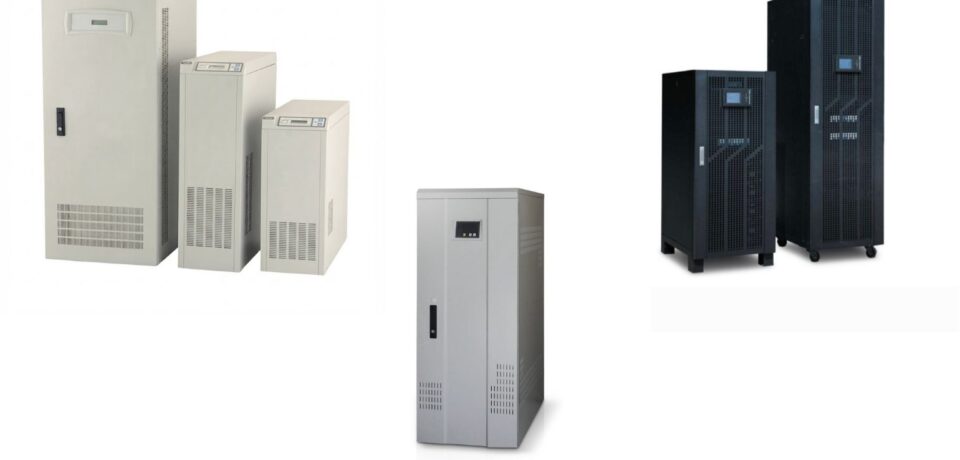
Why Are Proper Capacity Sizing and Procurement Planning Important for UPS Systems?
Power outages, voltage fluctuations, and sudden changes in power quality can directly affect the operations of many businesses today, from manufacturing facilities and data centers to healthcare institutions, offices, and telecommunications infrastructure. In environments where critical systems must operate continuously, maintaining power continuity has become an important requirement for operational reliability and business continuity.
At this point, UPS systems are among the key energy solutions that allow connected equipment to continue operating for a certain period during power outages or voltage irregularities. However, choosing the right UPS is not a process that can be managed simply by looking at the device’s power rating. Load capacity, application area, expected runtime, battery configuration, future expansion plans, and technical infrastructure should all be evaluated together.
Especially in high-volume corporate purchases and international projects, proper UPS supply planning is important not only in terms of technical compatibility but also for delivery, logistics, and long-term supply continuity. Indastrials evaluates B2B UPS requirements from different industries according to technical needs, order quantities, and delivery conditions, with the aim of developing suitable sourcing alternatives.
How Should UPS Capacity Be Determined?
One of the most important aspects of UPS selection is correctly calculating the total load that the system needs to support. Computers, servers, network equipment, industrial control systems, and other electrical devices used within a business may all have different power requirements. For this reason, selecting a UPS based only on current power consumption may not always be sufficient.
When determining UPS capacity, future capacity increases should also be considered in addition to the total power demand of connected equipment. If new devices are added, the business expands, or the infrastructure grows over time, having sufficient UPS capacity can provide an important operational advantage.
It is also necessary to interpret kVA and kW values correctly in UPS systems. Although these values are related, they do not represent exactly the same concept. Therefore, purchasing decisions should not be based solely on a single capacity figure shown in a product catalog. The actual power requirements of the connected equipment and the operating conditions of the system should also be taken into account.
Especially in corporate projects, proper capacity planning can help reduce performance problems caused by undersized systems as well as unnecessary investment in systems that are significantly larger than required.
Online, Line-Interactive, and Different UPS Technologies
Not every business has the same power continuity requirements. For this reason, UPS systems are available with different operating technologies. Depending on the application, different solutions such as line-interactive and online UPS systems may be considered.
Line-interactive UPS systems may be suitable for office equipment, computer systems, and certain electronic devices, while online UPS systems may be preferred in applications where power quality is critical and uninterrupted operation is a priority. Data centers, industrial control systems, healthcare facilities, and critical IT infrastructure are examples of environments where such requirements may apply.
When selecting UPS technology, it is important to consider not only the backup duration provided during a power outage but also how the system responds to changes in grid voltage. In environments where sensitive electronic equipment is used, fluctuations in power quality may create operational risks.
For this reason, the intended use of the UPS system should be clearly defined before procurement begins. Questions such as which equipment the system will support, how long it is expected to operate during a power outage, and what level of protection is required in terms of power quality should form the basis of the purchasing process.
Planning Battery Runtime and Operational Requirements
One common misconception in UPS systems is treating device capacity and backup runtime as the same factor. The amount of power a UPS can support and the length of time it can keep connected loads operating during an outage depend on different variables.
Backup runtime may be influenced by the connected load, battery capacity, system efficiency, and overall configuration. For some businesses, a short runtime may be sufficient to allow systems to shut down safely after a power outage. In other projects, critical equipment may need to continue operating for a much longer period.
Therefore, when preparing a UPS order, not only the device model but also the required runtime and battery configuration should be clearly defined. In systems that support external battery cabinets or different battery capacities, alternative configurations may be evaluated according to project requirements.
For corporate procurement, operational factors such as maintenance and future battery replacement should also be considered. Especially for businesses using UPS systems across multiple locations, standardizing similar system configurations can help simplify equipment management and maintenance processes.
In B2B UPS Procurement, the Supply Chain Matters as Much as Product Selection
In corporate UPS purchasing, technical suitability is only one part of the process. The ability to source the required products in the necessary quantities and within the planned timeframe is equally important. Projects involving factories, data centers, commercial buildings, or multi-location businesses may require dozens or even hundreds of UPS units. In such cases, manufacturer capacity, product availability, and delivery planning can directly affect the procurement process.
When international sourcing is involved, it is also important to verify that the technical specifications of the equipment are compatible with the electrical infrastructure of the destination market. Input and output voltage, frequency, connection options, and system configuration should all be reviewed according to project requirements.
Indastrials evaluates bulk UPS procurement requests based on intended use, required capacity, quantity, technical expectations, and destination country. The aim is not simply to offer an available product, but to identify sourcing alternatives that match the customer’s technical and commercial requirements.
For distributors, project companies, system integrators, and corporate businesses that make regular purchases, establishing a reliable supply network can help manage not only current projects but also future requirements more effectively.
Supporting Business Continuity with the Right UPS Supply Strategy
UPS systems are important infrastructure components that help businesses protect critical operations against power interruptions. However, to achieve the expected benefits, the equipment must be selected according to the actual technical requirements of the application.
Correct capacity calculation, selection of the appropriate UPS technology, planning the required backup runtime, and sourcing the equipment through a reliable procurement process are all key elements of a successful purchasing operation.
Indastrials evaluates B2B UPS supply requirements for corporate buyers, distributors, project companies, and importers operating across different industries. Based on product capacity, application area, order quantity, and delivery requirements, we aim to develop suitable procurement alternatives.
For information about bulk UPS supply options, different capacity alternatives, and product solutions suitable for your project, you can contact Indastrials and submit your required technical specifications and order quantity through the quotation form.